Materials and Tools Required to Complete the Restring Process
Materials and Tools Required to Complete the Restring Process
To start the process, first you have to remove the old strings. This should be done slowly and one string at a time. Bass strings are very thick, and put a lot of tension on the neck. Once you have all four strings removed (six in my case), you can clean the fretboard with orange oil. Once the fretboard has been cleaned, it is time to add the new strings. Before trimming each string, stretch the string past the next two tuners on your headstock. This will help make sure each string has the required three wraps around the tuning machine peg.
Once you have all four strings wound onto their pegs, it is time for stretching the strings. I like to tune them one half step higher than the requested tuning if I am working on someone else's guitar or bass. Or, a half step above standard tuning if I am working on my own. Once you have this done, it's time for your bass to go back in its case. This is to allow the new bass strings to stretch out naturally and slowly. This will make the next steps; setting up the action, adjusting the truss rod, and finally setting your intonation so the instrument will stay in tune.
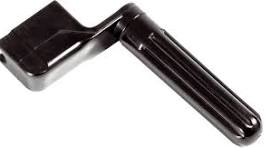
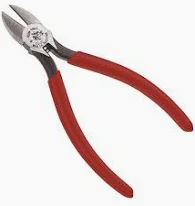
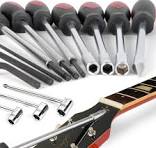
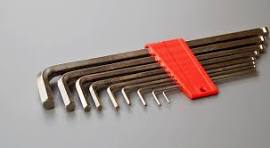
Materials and Tools for the Job
 |
 |
 |
 |
 |
 |